The Seaside Osteo & Allied Health
~ 0 concussions
The Seaside Osteo & Allied Health
The Seaside Osteo supports safer sport with expert concussion care and Pre-Season Baseline Testing, giving clubs and families clear, evidence-based guidance when head injuries occur.
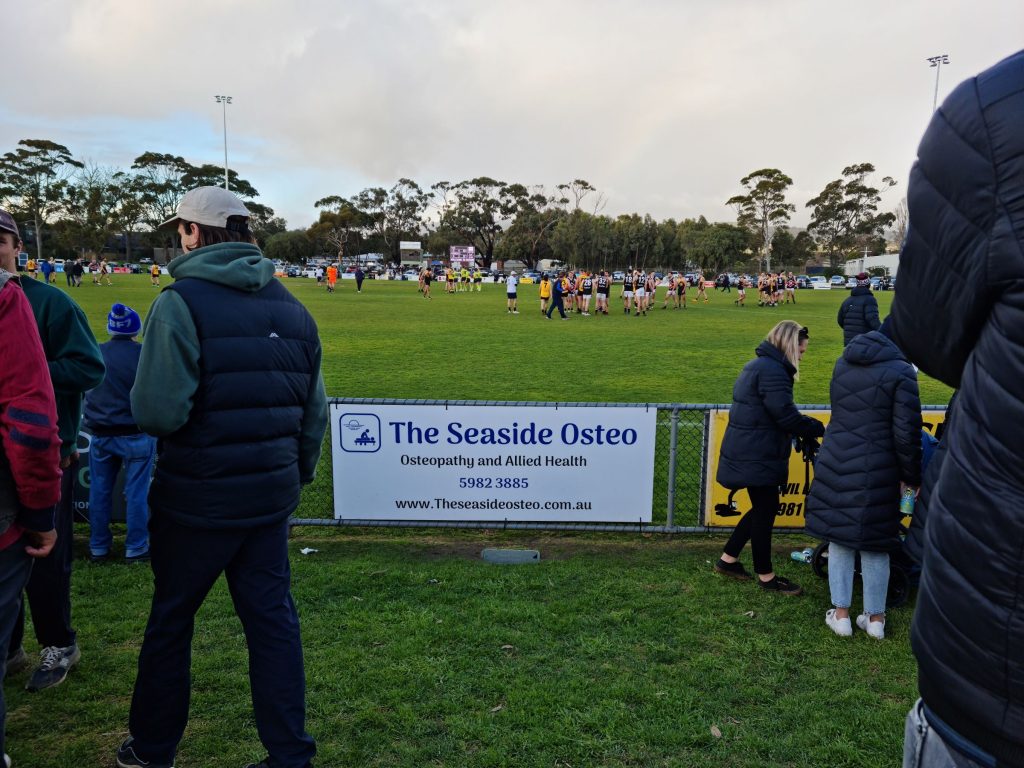
Concussion is a G-force related brain injury, and junior sports players are at higher risk due to their developing bodies and brains, making recovery slower and re-injury more likely. The Seaside Osteo provides expert concussion care and Complete Concussion Management baseline testing to support safer sport, guided by clinicians trained in evidence-based rehabilitation and return-to-play.
Baseline testing records key measures when athletes are healthy, allowing post-injury results to be compared for clearer clinical decision-making. Support your players and club with professional concussion education and pre-season baseline testing.
To create a world where every individual has access to high-quality mental health care and the tools necessary to thrive in their personal and professional lives.
Best for: Clubs seeking foundational education without baseline testing or software
*Annual pricing:
Best for: Clubs wanting manual baseline testing without software.
*Annual pricing:
Best for: Clubs wanting full software suite plus objective data.
*Annual pricing:
Best for: Clubs seeking a full-year concussion safety partnership.
*Annual pricing:
Fill out the form and our team will contact you to discuss the program and recommend the most suitable package for your needs.
Children and adolescents recover differently from adults and can have variable symptom reporting. Structured baselines provide objective references for balance, eye-movement and cognitive tasks, helping clinicians tailor rehabilitation and return-to-learn/play plans.
• Symptom inventory (0–6 severity scale)
• VOMS (vestibular/ocular motor screening: pursuits, saccades, convergence, VOR, visual motion)
• Balance assessment (modified BESS) and tandem gait as needed
• Cervical spine screen (ROM and isometric strength)
• Simple reaction time test
• Optional validated tools via software (e.g., King-Devick and/or computerised neurocognitive testing such as CCMI) when requested by the club or parent/guardian
• Fit-for-sport education: red flags, remove-from-play, and communication templates for parents/schools
No. It is recommended as a helpful decision-support tool. Participation should not be contingent on baseline testing, and lack of a baseline never delays removal from play or medical care after a suspected concussion.
Annually is recommended (or every 12 months), and sooner if there has been a concussion, significant growth spurt, vision changes or new neurological/learning conditions.
Ideally 2–6 weeks before the season starts, when the athlete is healthy, well-rested, and free of acute illness. Avoid testing within 24–48 hours of strenuous exercise or if symptomatic from any illness or prior head knock.
A standard team session takes about 10–15 minutes per athlete (field-based station format). If optional software tests are added, allow 20–30 minutes per athlete depending on the package.
They should bring and wear their usual corrected lenses for both baseline and any post-injury testing to ensure results are comparable.
Baselines cannot diagnose concussion, predict recovery times, or guarantee prevention. They provide context for clinicians. Post-injury care still relies on clinical assessment, symptom-limited exercise progressions, and medically supervised return-to-learn then return-to-play. Post-injury care can be better individualised with baseline testing and return-to-play clearance testing is based on these individualised tests, not normative data.
Remove the athlete from play immediately — no same-day return. Monitor for red flags and seek medical assessment. Follow your club’s Emergency Action Plan. For community football, current guidance requires a minimum 21-day stand-down from matches with a stepwise, symptom-limited progression and medical clearance before full return. Return-to-learn/school precedes return-to-sport. The Seaside Osteo concussion rehabilitation policy reflects AFL concussion guidelines and emphasises full recovery prior to return-to-play; the AFL stand-down period is a minimum requirement.
A clinician may compare post-injury results (symptoms, VOMS, balance, and optional software measures) to the pre-season baseline to help identify deficits (e.g., vestibular/ocular or cervical findings) and to individualise rehabilitation and school/sport accommodations.
Baseline sessions are delivered by The Seaside Osteo osteopaths with specialised training in concussion rehabilitation and Complete Concussions Management methods.
Yes. Written consent is required for all athletes under 18. We provide consent forms and information sheets in advance.
We comply with the Australian Privacy Principles. Data is stored securely and shared only with parents/guardians and authorised clinicians. Data can be shared with coaching and support staff but only with prior parent/guardian consent. Where CCMI software is used, athlete accounts are created with parent/guardian consent and platform privacy policies apply.
Comfortable clothing, their glasses/contacts, any relevant medical information (e.g., learning differences, migraines), and the signed consent form.
Initial medical assessment and symptom-limited rest (24–48 hours)
Early, sub-symptom aerobic activity as tolerated
Targeted vestibular/oculomotor and cervical spine rehabilitation if indicated
Graduated return-to-learn (classroom adjustments as needed)
Graduated return-to-sport over multiple stages with monitoring
Medical clearance before full contact/competition
Pricing depends on package selection (education only, field baseline, software-integrated, or annual partner program). In-clinic testing fees are $160 per consultation. In-field or club-based testing pricing has been adjusted to make testing more accessible for junior athletes.
Yes. We provide school communication templates and can liaise with year-level coordinators to support return-to-learn planning.